Wall definition
A through-both-walls hole and a single-wall opening are different features; make the intended geometry explicit.
Cut-to-drawing stainless steel round tube sections with transverse holes and defined end positions. Hole orientation around the tube is as important as axial spacing, particularly when the tube joins a frame or fixture.
Tube laser cutting · Custom openings & end profiles
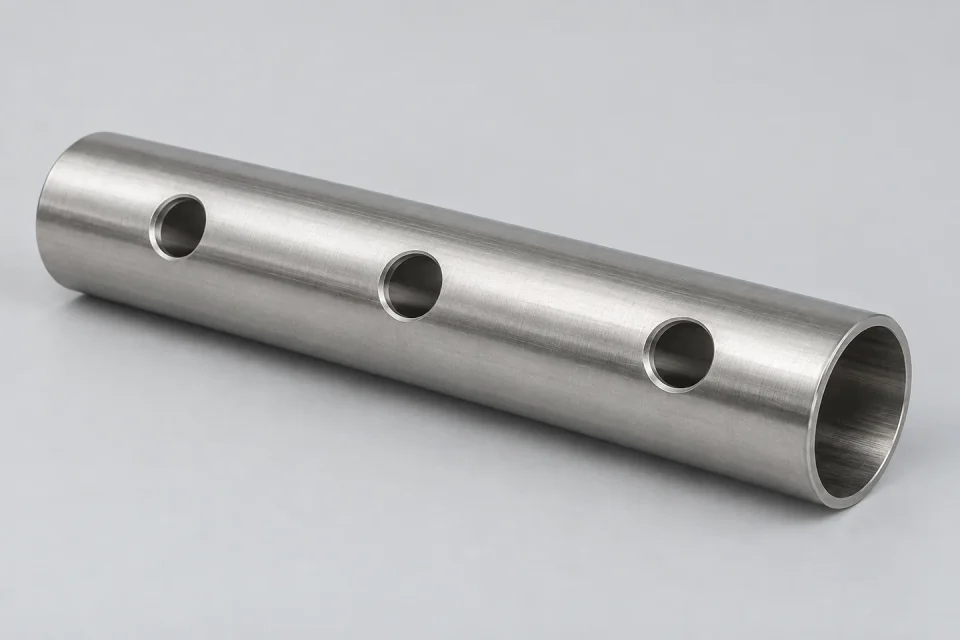
The dimensions below help us review round tubes with holes. State units and critical tolerances on the original drawing. The illustration explains the type of geometry; it does not define a standard size.
| Outside diameter | Give tube outside diameter and wall thickness. |
|---|---|
| Cut length | Dimension the finished overall length. |
| Hole station | Locate each hole axially from a named end datum. |
| Rotational orientation | Specify angular position and whether holes pass through one or both walls. |
| Material & quantity | Give the exact metal grade, standard, temper or condition, quantity per revision and planned repeat orders. |
| Units & tolerances | Use mm or inches consistently. Mark the dimensions that control fit and the inspection datum. |
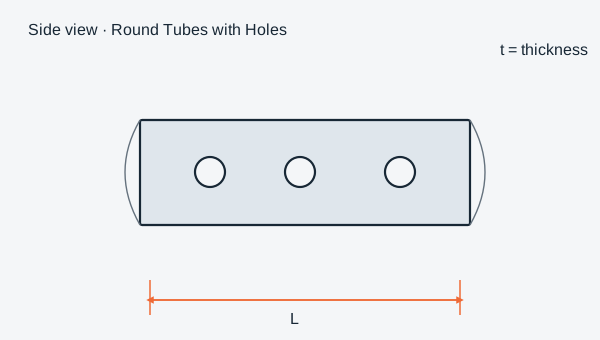
Thickness range, minimum features, tolerances, finish availability and delivery date are reviewed for your actual part. No catalog dimension or blanket machining tolerance is implied.
Tube section, axial feature locations and the orientation of holes, slots and shaped ends.
A through-both-walls hole and a single-wall opening are different features; make the intended geometry explicit.
Identify welded or seamless stock requirements and whether seam position affects the part.
Grade, environment and visible-face requirements are separate specification choices. Include them before quotation so the material and process route can be reviewed together.
Stainless steel options include 304, 304L, 316, 316L, 430 and duplex 2205. Carbon steel, galvanized steel, aluminium, copper and brass can also be discussed for your drawing. State the exact grade and applicable material standard.
Read the grade selection reference for general material context. Availability, product form and suitability are confirmed for the project. Explore all six material families.
Identify a mill finish, brushed appearance or another specified finish; include the visible face, grain direction and any surface-roughness requirement.
Specify edge deburring, protective-film handling and packing if they affect the delivered part. Read the finish terminology guide.
Material options are reviewed against your drawing, grade, thickness and finishing needs. Stainless steel remains our core focus; sourcing and the manufacturing route are confirmed during quotation.
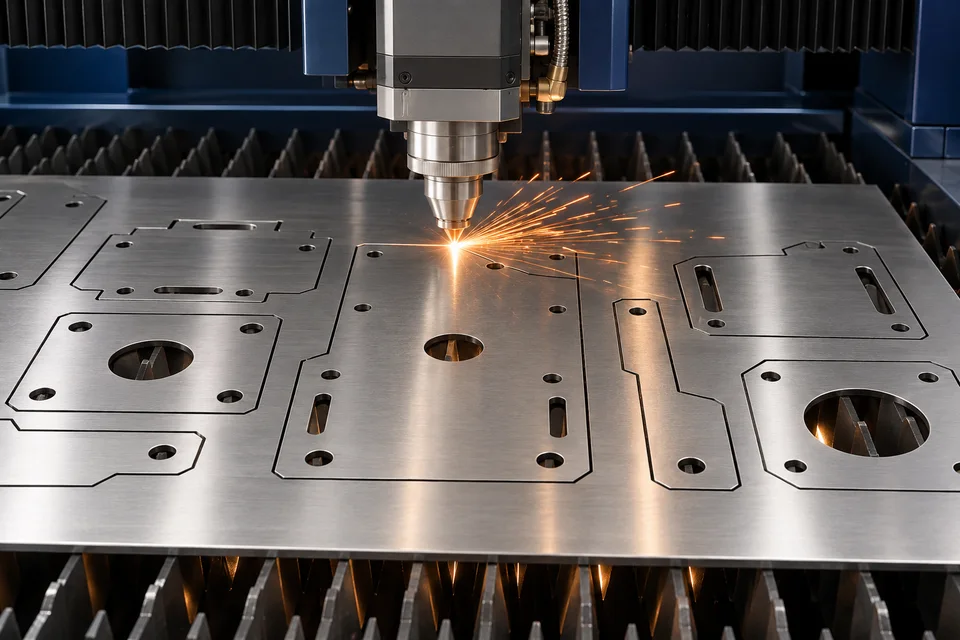
Inspect length, hole stations and angular orientation, with the tube-end datum clearly identified.
Provide the inspection datum, critical dimensions and any requested records with the inquiry. A model preview supports communication; the approved engineering drawing remains the manufacturing reference.
Quality & material requirementsOnly if your drawing specifies it. Show the required wall or walls and the angular relationship of all openings.
Send your round tubes with holes drawing, grade, thickness or tube section, quantity, finish and critical dimensions. A clear PDF or image is accepted for review; a DXF supports flat cutting contours.
Include prototype quantity and expected repeat quantity in the inquiry. Batch size, process route and lead time are confirmed after the drawing and specification review.
Send the file and procurement requirements. No customer account is needed.
Upload & Request a QuoteCompare the geometry and drawing requirements.
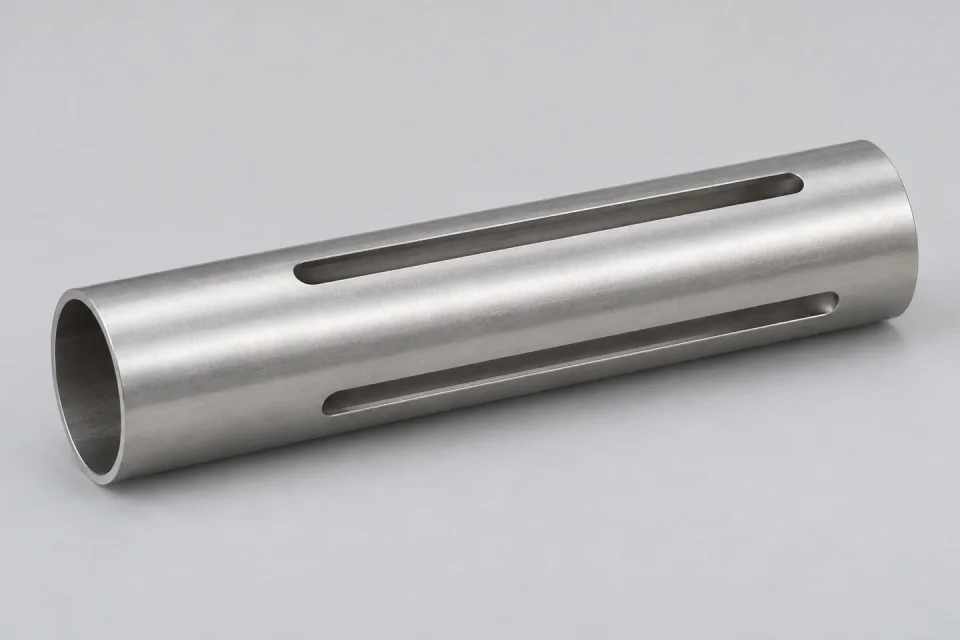
Stainless steel round tubes with longitudinal or circumferential slots for customer-designed interfaces.
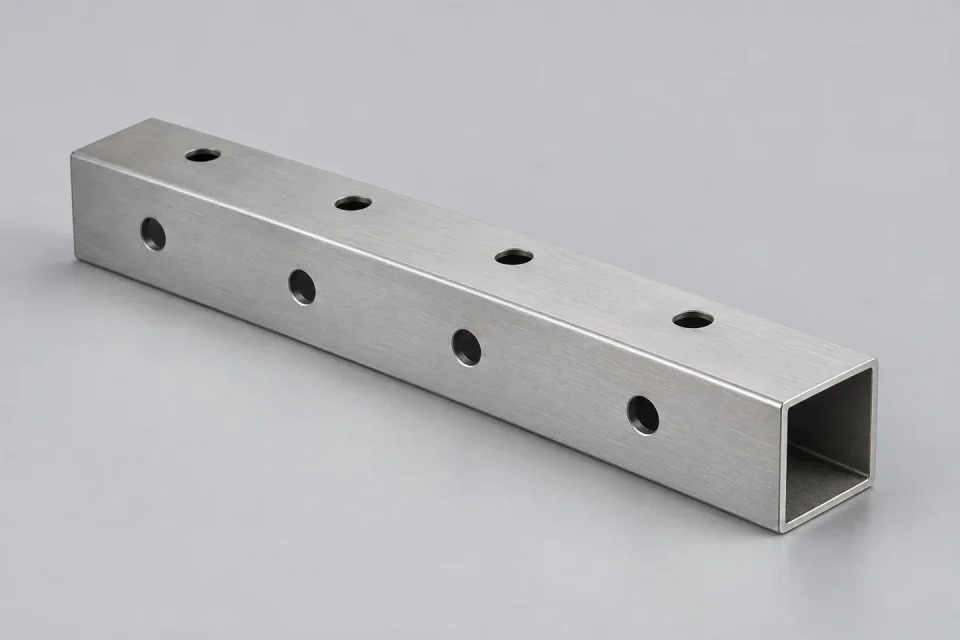
Part details & dimensionsStainless steel square tube members with indexed holes on specified faces.
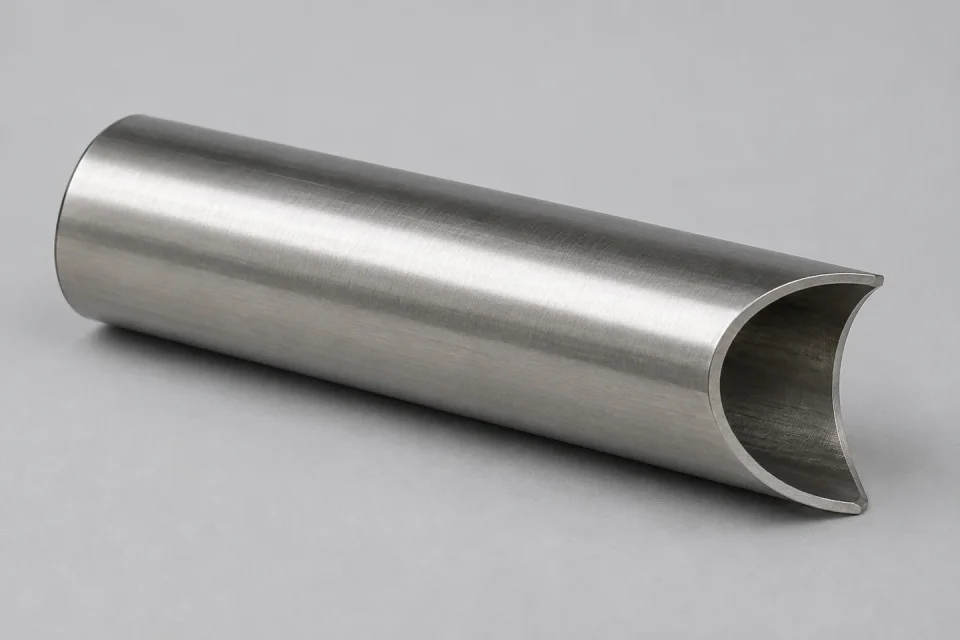
Part details & dimensionsStainless steel tube sections with saddle or fishmouth ends that meet another round member.
Part details & dimensionsDrawing checklist and custom laser cutting quotation factors.