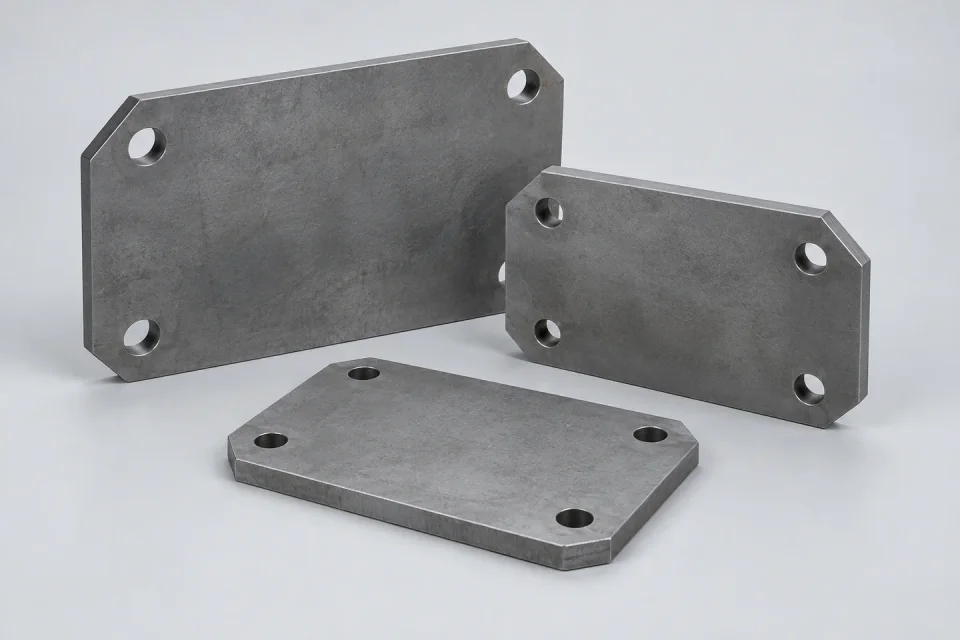
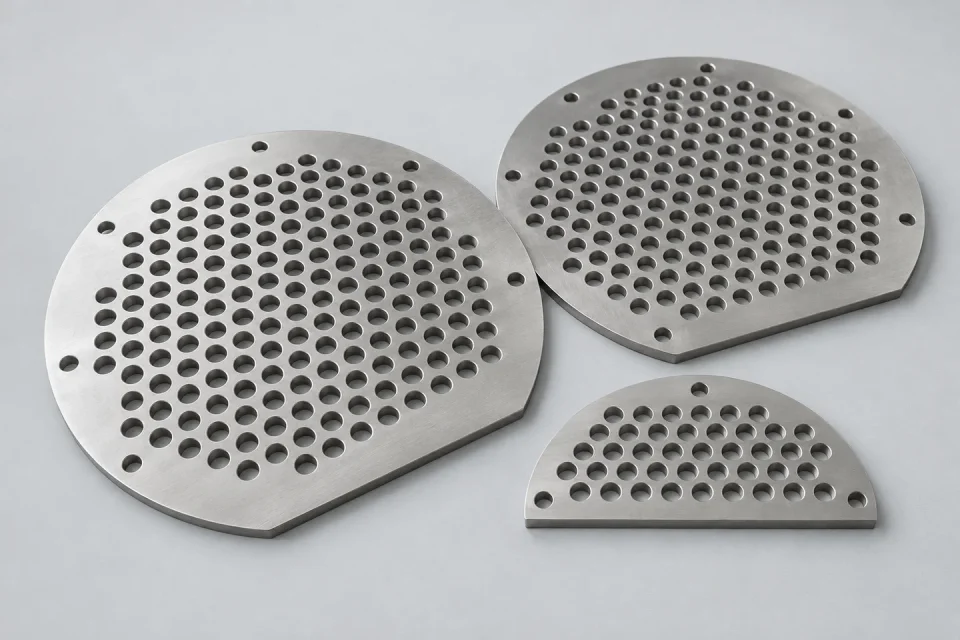
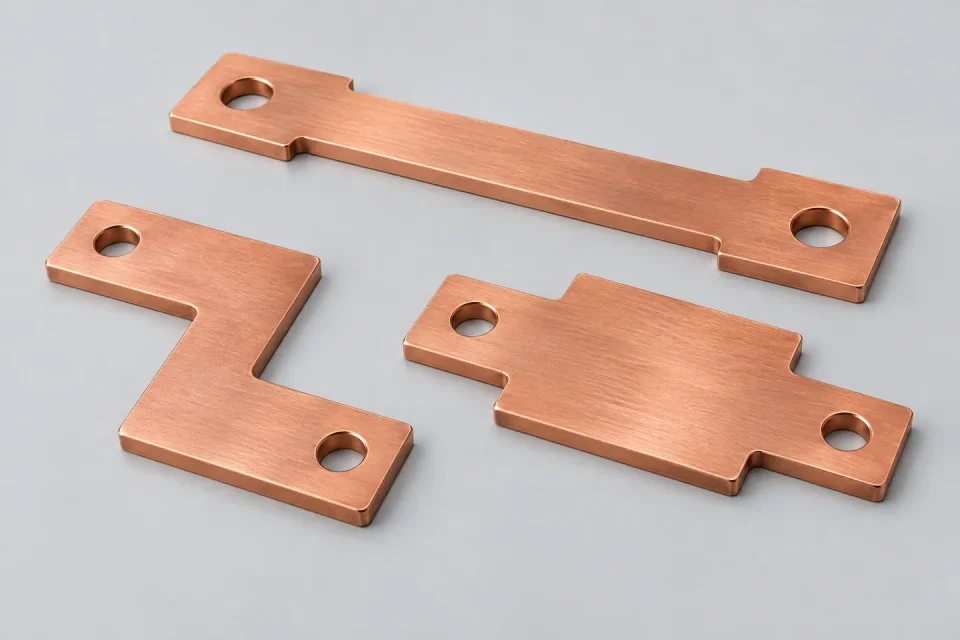
Interface geometry
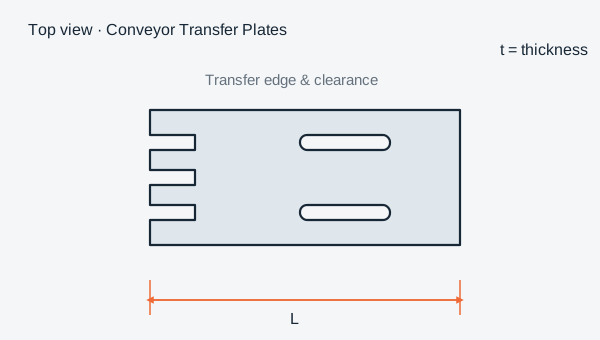
Provide adjoining conveyor details and conveyed-product information. Comb teeth, where used, need defined pitch, width and clearance.
OEM transfer and dead plates that bridge the interface between conveyor sections. The working edge, installed height and mounting adjustment follow the customer drawing so conveyed products can pass across the defined gap.
Contour cutting · Mounting slots · Deburring · Working-edge machining as specified
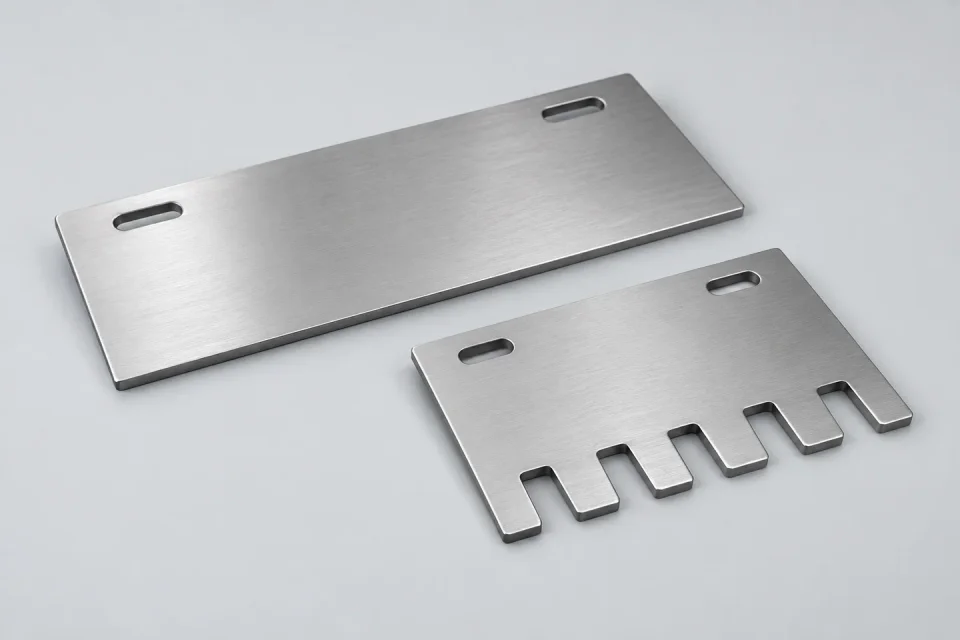
The dimensions below help us review conveyor transfer plates. State units and critical tolerances on the original drawing. The illustration explains the type of geometry; it does not define a standard size.
| Transfer edge and gap | Dimension the working edge, conveyor gap and clearance to moving belts or rollers. |
|---|---|
| Working height and flatness | State the installed height, contact-face flatness and any edge thinning or chamfer. |
| Fixings and adjustment | Give mounting-hole or slot locations and usable adjustment travel. |
| Material and contact condition | Specify thickness, grade, surface, edge finish and any application-specific cleanliness requirements. |
| Material & quantity | Give the exact metal grade, standard, temper or condition, quantity per revision and planned repeat orders. |
| Units & tolerances | Use mm or inches consistently. Mark the dimensions that control fit and the inspection datum. |
Thickness range, minimum features, tolerances, finish availability and delivery date are reviewed for your actual part. No catalog dimension or blanket machining tolerance is implied.
Cut contours, hole function and the way the plate meets its mating parts.
Provide adjoining conveyor details and conveyed-product information. Comb teeth, where used, need defined pitch, width and clearance.
Food-contact or hygienic requirements must be stated and confirmed separately, including material records and finishing. They are not implied by stainless steel alone.
Grade, environment and visible-face requirements are separate specification choices. Include them before quotation so the material and process route can be reviewed together.
Specify the approved material grade, thickness and finished contact surface for the conveyor application. Where product-contact requirements apply, include them in the inquiry for separate confirmation.
Compare material families and grades. Sourcing, product form and the processing route are confirmed for your drawing.
Specify the delivered surface condition and identify any coating, grinding, plating or masking requirements. Mark roughness and the faces or edges that need protection so the complete route can be reviewed.
Specify edge deburring, protective-film handling and packing if they affect the delivered part. Read the finish terminology guide.
Material options are reviewed against your drawing, grade, thickness and finishing needs. Stainless steel remains our core focus; sourcing and the manufacturing route are confirmed during quotation.
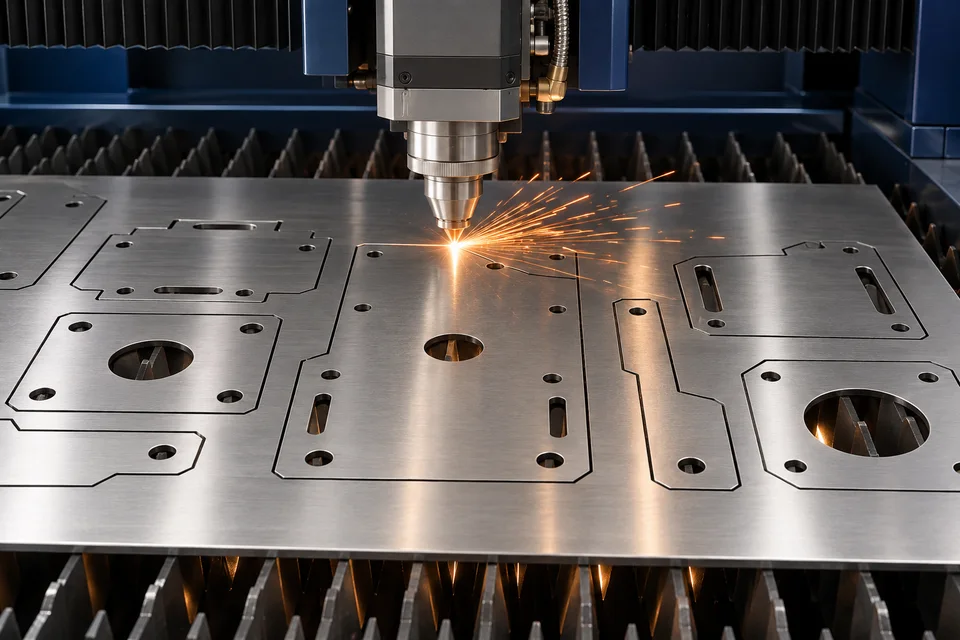
Check the transfer-edge profile, fixing locations and agreed contact-face condition. Inspect machined edges and installed clearances against the approved drawing.
Provide the inspection datum, critical dimensions and any requested records with the inquiry. A model preview supports communication; the approved engineering drawing remains the manufacturing reference.
Quality & material requirementsYes, for technical review. Provide tooth pitch, width, depth and the required clearance to the mating conveyor; this is a variation of the transfer plate.
Show its thickness, length and edge profile. Tapering or finishing the working edge may require machining beyond the cutting operation.
Send your conveyor transfer plates drawing, grade, thickness or tube section, quantity, finish and critical dimensions. A clear PDF or image is accepted for review; a DXF supports flat cutting contours.
Include prototype quantity and expected repeat quantity in the inquiry. Batch size, process route and lead time are confirmed after the drawing and specification review.
Send the file and procurement requirements. No customer account is needed.
Upload & Request a QuoteCompare the geometry and drawing requirements.
Replaceable liner profiles for customer-designed chutes, hoppers and transfer points.
Part details & dimensionsDimensioned internal plates for separating equipment regions, directing flow or locating a customer-designed tube arrangement.
Part details & dimensionsCustomer-designed copper or aluminium connection profiles for electrical equipment.
Part details & dimensionsDrawing checklist and custom laser cutting quotation factors.