Material and cutting review
Wear-material sourcing, cutting heat effects and hole processing are reviewed per specification. Ordinary stainless steel is not assumed to meet an abrasion-resistance requirement.
Replaceable liner profiles for customer-designed chutes, hoppers and transfer points. Material selection and the attachment method are reviewed for the stated abrasion and impact conditions before the cutting and finishing route is agreed.
Wear-material sourcing review · Profile cutting · Drilling or countersinking as specified
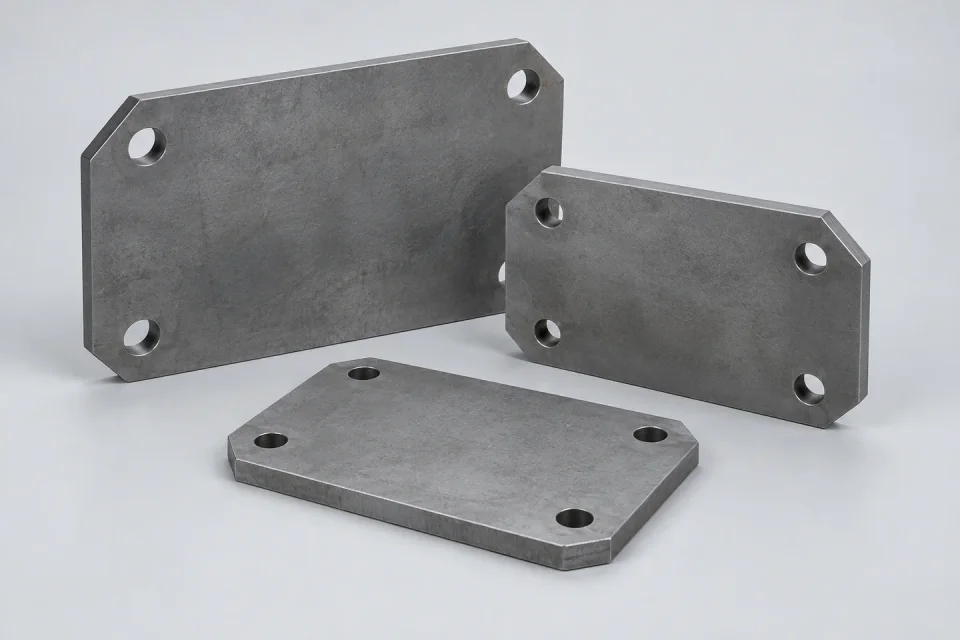
The dimensions below help us review wear liner plates. State units and critical tolerances on the original drawing. The illustration explains the type of geometry; it does not define a standard size.
| Wear material and condition | Provide the specified grade, hardness or material specification rather than selecting by appearance alone. |
|---|---|
| Profile and segmentation | Dimension the liner shape, edge clearances, split layout and part identifiers. |
| Attachment features | Show fixing holes, countersinks, bolt details or weld interfaces and their positions. |
| Thickness and environment | State thickness, abrasion and impact conditions, operating temperature and required delivered condition. |
| Material & quantity | Give the exact metal grade, standard, temper or condition, quantity per revision and planned repeat orders. |
| Units & tolerances | Use mm or inches consistently. Mark the dimensions that control fit and the inspection datum. |
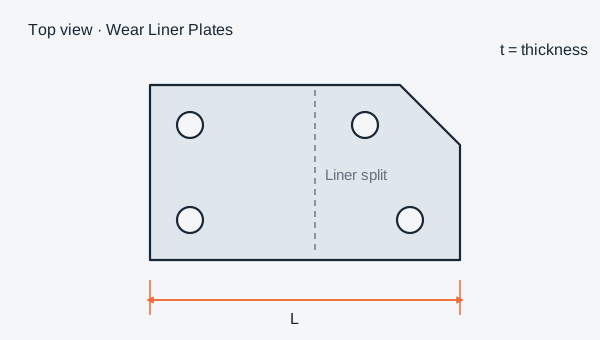
Thickness range, minimum features, tolerances, finish availability and delivery date are reviewed for your actual part. No catalog dimension or blanket machining tolerance is implied.
Cut contours, hole function and the way the plate meets its mating parts.
Wear-material sourcing, cutting heat effects and hole processing are reviewed per specification. Ordinary stainless steel is not assumed to meet an abrasion-resistance requirement.
Identify adjoining liners, installation clearance and orientation. Countersinks, drilling, forming and welding are separate operations when specified.
Grade, environment and visible-face requirements are separate specification choices. Include them before quotation so the material and process route can be reviewed together.
Specify the wear material and condition approved for your duty, including required hardness or abrasion properties. Carbon steel, stainless steel and proprietary wear grades are not interchangeable; sourcing and processing need project-specific confirmation.
Compare material families and grades. Sourcing, product form and the processing route are confirmed for your drawing.
Specify the delivered surface condition and identify any coating, grinding, plating or masking requirements. Mark roughness and the faces or edges that need protection so the complete route can be reviewed.
Specify edge deburring, protective-film handling and packing if they affect the delivered part. Read the finish terminology guide.
Material options are reviewed against your drawing, grade, thickness and finishing needs. Stainless steel remains our core focus; sourcing and the manufacturing route are confirmed during quotation.
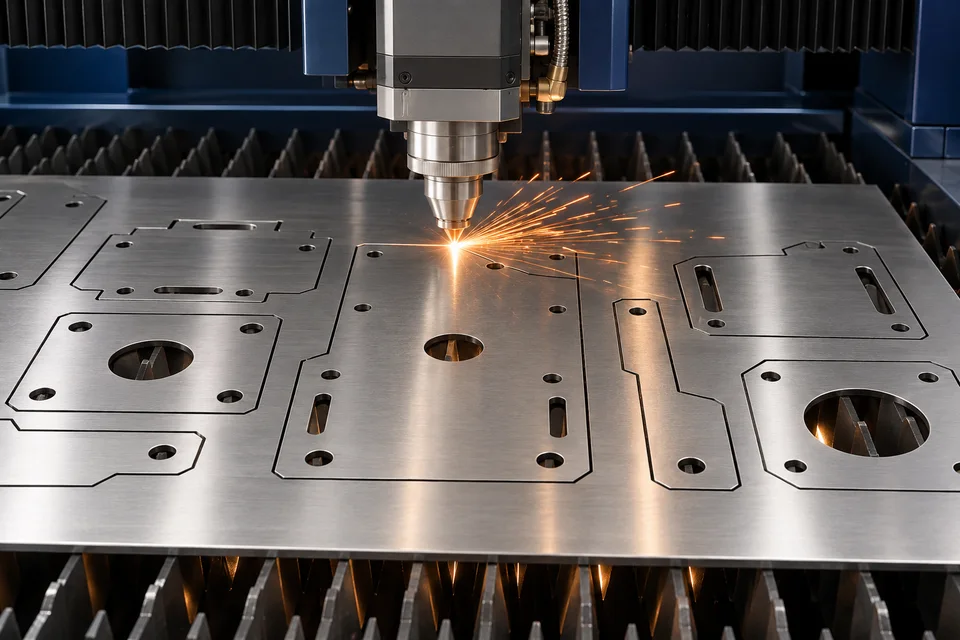
Inspect profile, thickness and fastening features. Specify material identity, hardness documentation and any post-cut inspection needed by the approved requirements.
Provide the inspection datum, critical dimensions and any requested records with the inquiry. A model preview supports communication; the approved engineering drawing remains the manufacturing reference.
Quality & material requirementsProvide the fastener and countersink geometry, remaining section and required fit. Secondary drilling or machining is reviewed as part of the process route.
Provide the exact grade and required documentation. Availability and sourcing are confirmed for the project; no branded-material partnership is implied.
Send your wear liner plates drawing, grade, thickness or tube section, quantity, finish and critical dimensions. A clear PDF or image is accepted for review; a DXF supports flat cutting contours.
Include prototype quantity and expected repeat quantity in the inquiry. Batch size, process route and lead time are confirmed after the drawing and specification review.
Send the file and procurement requirements. No customer account is needed.
Upload & Request a QuoteCompare the geometry and drawing requirements.
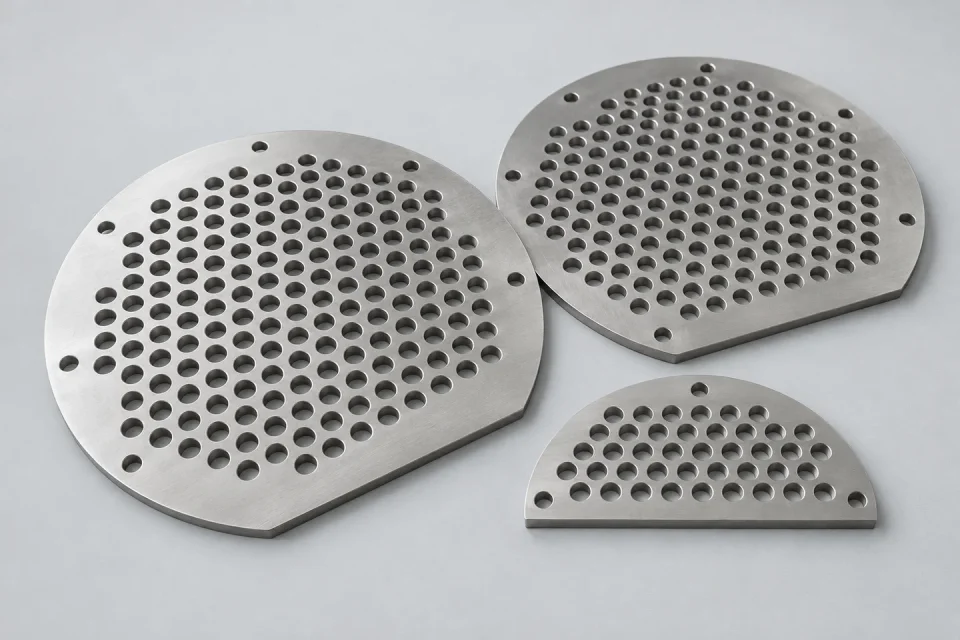
Dimensioned internal plates for separating equipment regions, directing flow or locating a customer-designed tube arrangement.
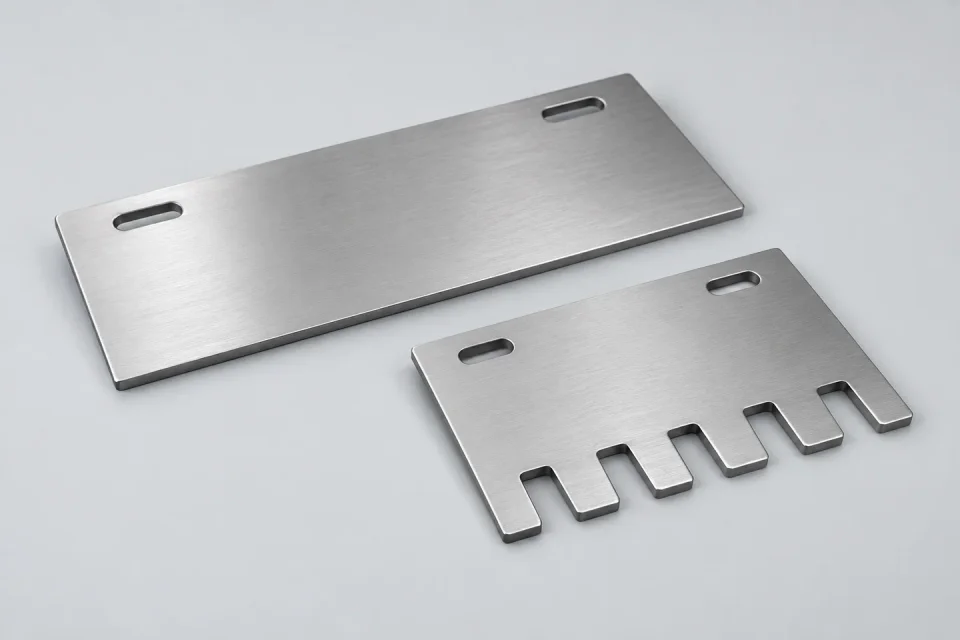
Part details & dimensionsOEM transfer and dead plates that bridge the interface between conveyor sections.
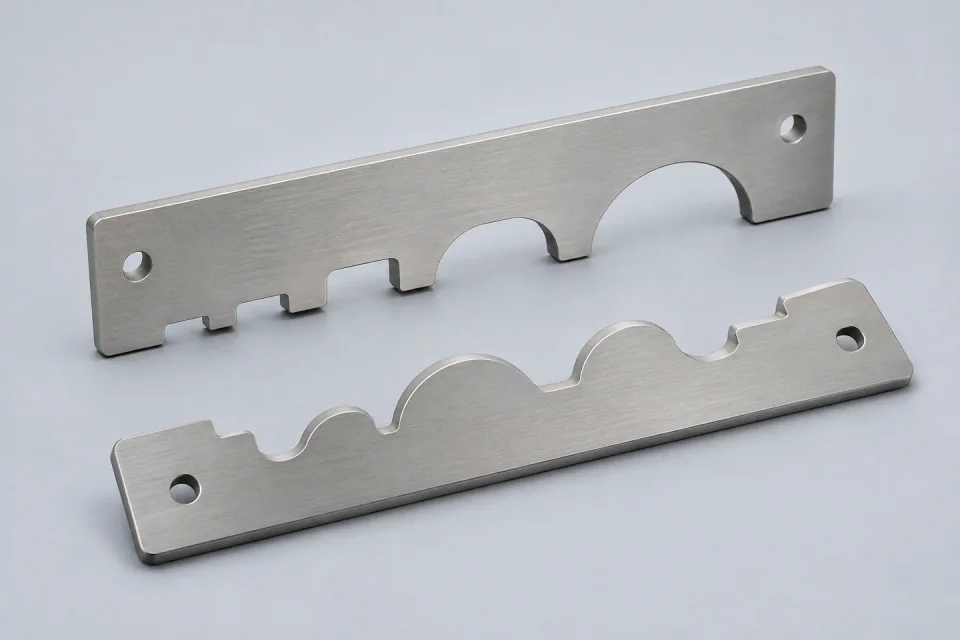
Part details & dimensionsCustomer-designed contour templates and checking-profile blanks for comparing formed parts or assembly envelopes.
Part details & dimensionsDrawing checklist and custom laser cutting quotation factors.